Nonya Hokkien Stir-Fried Noodles Recipe
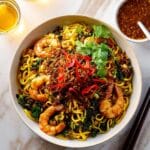
Nonya Hokkien Stir-Fried Noodles is a flavorful and authentic Malaysian dish featuring fresh lo mein noodles stir-fried with pork belly, shrimp, and vibrant vegetables, finished with a fragrant fermented soybean paste sauce and topped with crispy shallots, egg strips, fresh chiles, and cilantro. This quick and savory stir-fry offers a perfect balance of textures and umami-rich flavors, best enjoyed with a spicy sambal belacan on the side.
- Prep Time: 15 minutes
- Cook Time: 20 minutes
- Total Time: 35 minutes
- Yield: 4 servings 1x
- Category: Main Course
- Method: Stovetop
- Cuisine: Malaysian
Ingredients
Scale
Noodles and Egg
- 1 pound fresh lo mein noodles
- 2 large eggs
- Fine salt, to taste
- ½ teaspoon canola oil (for egg)
Stir-Fry and Garnishes
- ¼ cup canola oil (for stir-frying)
- 3 large shallots, sliced thinly
- 1 tablespoon fermented soybean paste (taucheo) or Korean doenjang
- 3 garlic cloves, minced
- 4 ounces pork belly, cut into thin 2-inch slices
- 4 ounces shelled and deveined medium shrimp
- 1 cup low-sodium chicken broth, plus up to 1 cup more if desired
- 4 ounces mustard greens or bok choy, cut into 2-inch pieces
- 1½ cups bean sprouts
- ¾ teaspoon ground white pepper, plus more to taste
- 1 teaspoon fine salt, plus more to taste
- 2 Holland or other fresh red chiles, seeded and thinly sliced (for garnish)
- Cilantro sprigs (for garnish)
- Sambal belacan (optional, for serving)
Instructions
- Prepare Noodles: Bring a large saucepan of water to a boil. Add the fresh lo mein noodles and cook just until tender, about 1½ minutes. Drain well, rinse under cold water to stop cooking, and drain again thoroughly.
- Make Egg Strips: Whisk the eggs with a pinch of fine salt. Brush a nonstick frying pan with ½ teaspoon canola oil and heat over medium-low heat. Pour in the eggs and tilt the pan to form a thin, even layer. Cook without stirring until firmly set, about 4 to 5 minutes. Gently loosen the omelette with a spatula and flip onto a cutting board. Once cooled, roll the omelette and slice into thin strips, cutting longer strips in half.
- Fry Shallots: Heat a large wok or very large skillet over medium-high heat and add the remaining ¼ cup canola oil. Add half of the sliced shallots and stir continuously until crispy and light golden brown, about 5 minutes. Remove with a slotted spoon to a paper-towel-lined plate and set aside for garnish. Turn off heat.
- Cook Aromatics and Proteins: Reheat the wok over medium heat with the oil. Add the fermented soybean paste, minced garlic, and remaining sliced shallots. Stir until fragrant, about 40 seconds. Add the pork belly slices, shrimp, and 1 cup of chicken broth. Increase heat to high and bring to a boil.
- Add Vegetables and Noodles: Add the mustard greens (or bok choy), blanched lo mein noodles, and bean sprouts to the wok. Toss everything well to combine and cook until pork and shrimp are fully cooked, about 3 minutes. The broth should almost completely evaporate, but if preferred, add up to 1 cup more chicken broth to achieve a soupier consistency. Season with 1 teaspoon fine salt and ¾ teaspoon ground white pepper. Taste and adjust seasoning as needed.
- Serve and Garnish: Transfer the stir-fried noodles to a serving platter. Garnish with egg strips, crispy fried shallots, thinly sliced red chiles, and cilantro sprigs. Serve immediately, optionally accompanied by sambal belacan for an added spicy kick.
Notes
- Using fresh lo mein noodles ensures the best texture. If fresh noodles are unavailable, thawed frozen noodles can be used but may alter the texture slightly.
- The fermented soybean paste (taucheo) adds signature umami flavor, but Korean doenjang is a good substitute.
- Adjust the amount of chicken broth to your preferred noodle moisture level—less for drier stir-fry, more for soupy consistency.
- For a vegetarian version, omit pork and shrimp and substitute with firm tofu or additional vegetables.
- Stir-frying over high heat while tossing ingredients quickly is key to preserving crunchy vegetables and developing flavor.
Keywords: Nonya Hokkien noodles, stir-fried noodles, Malaysian cuisine, lo mein noodles, pork belly stir-fry, shrimp noodles, fermented soybean paste, taucheo, sambal belacan